Content
This study examines how short- and long-term household housing satisfaction can serve as a more meaningful measure of reconstruction outcomes reflecting affected households’ lived experiences.
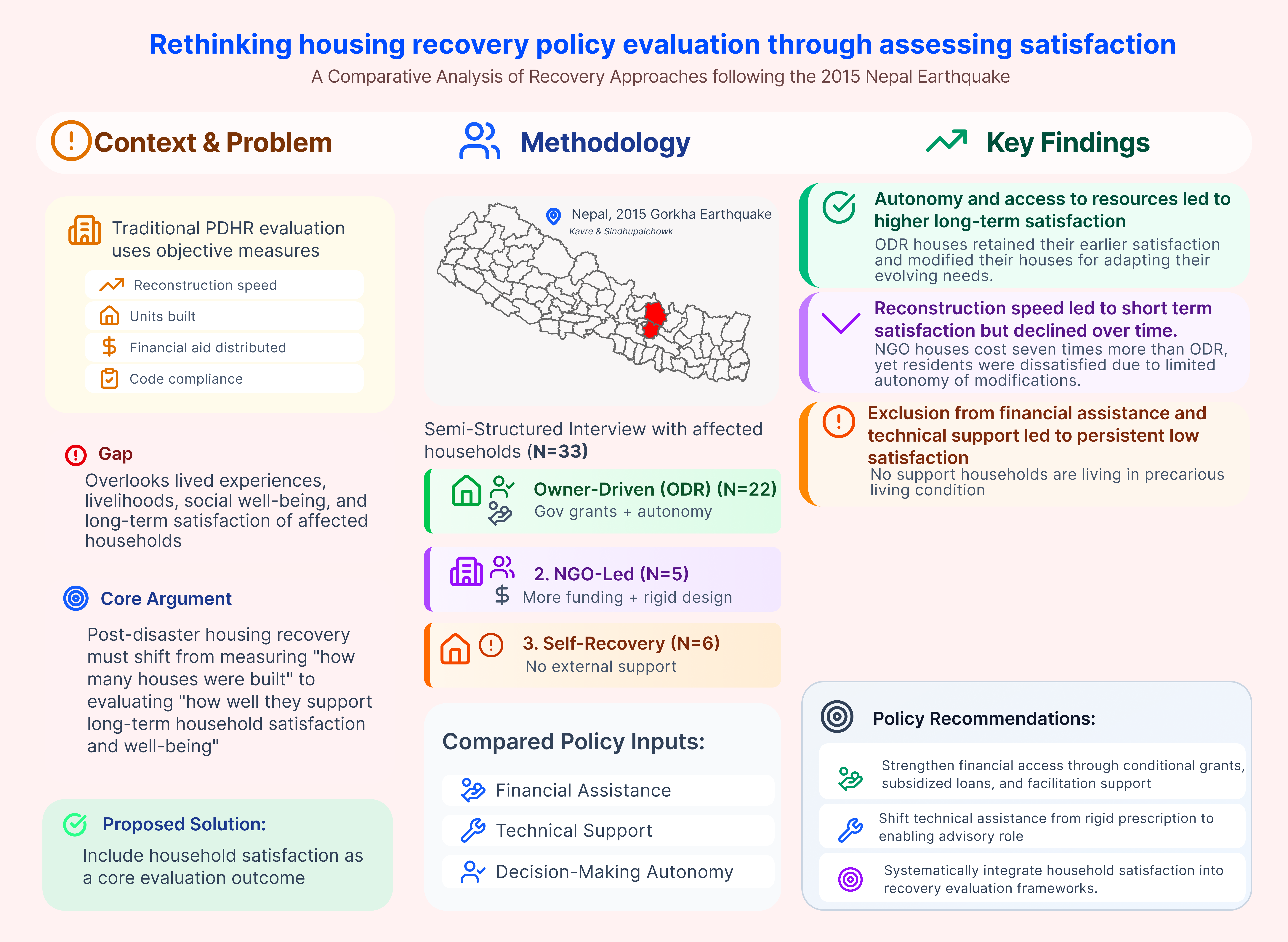
Rethinking housing recovery policy evaluation through assessing satisfaction
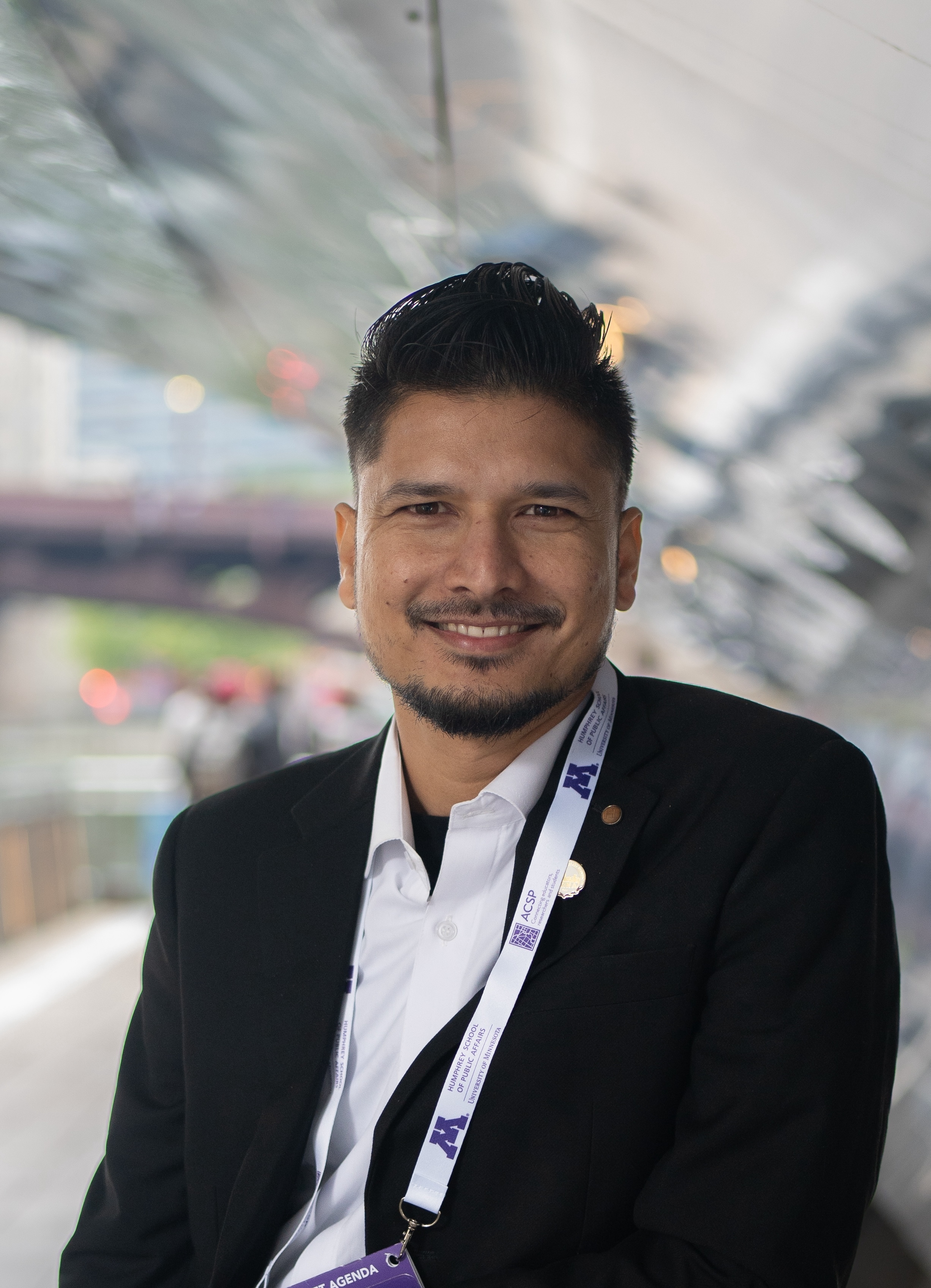
Apil K C
PhD Researcher
The introduction to the Special Issue on Longitudinal Recovery
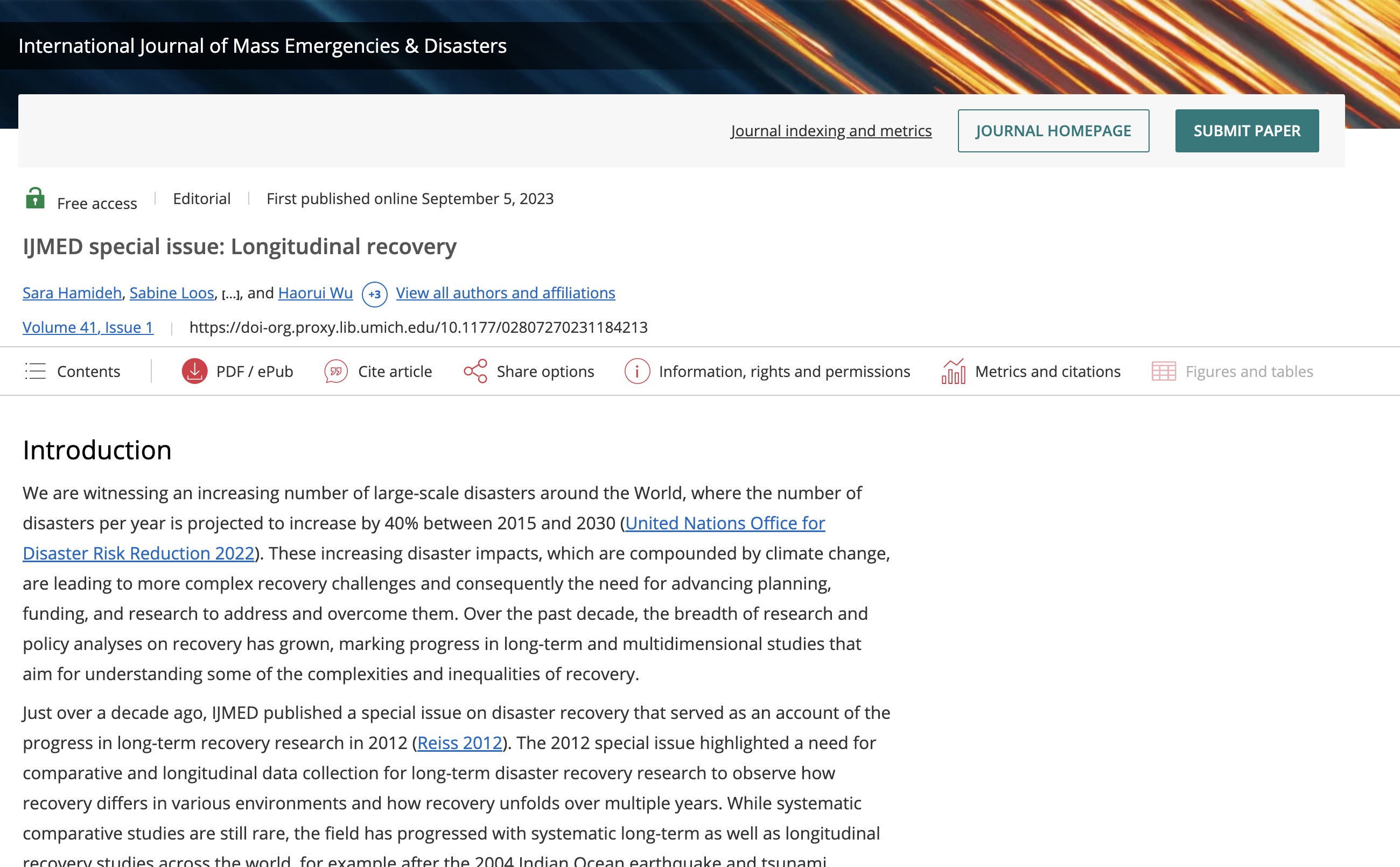
IJMED Special Issue: Longitudinal Recovery
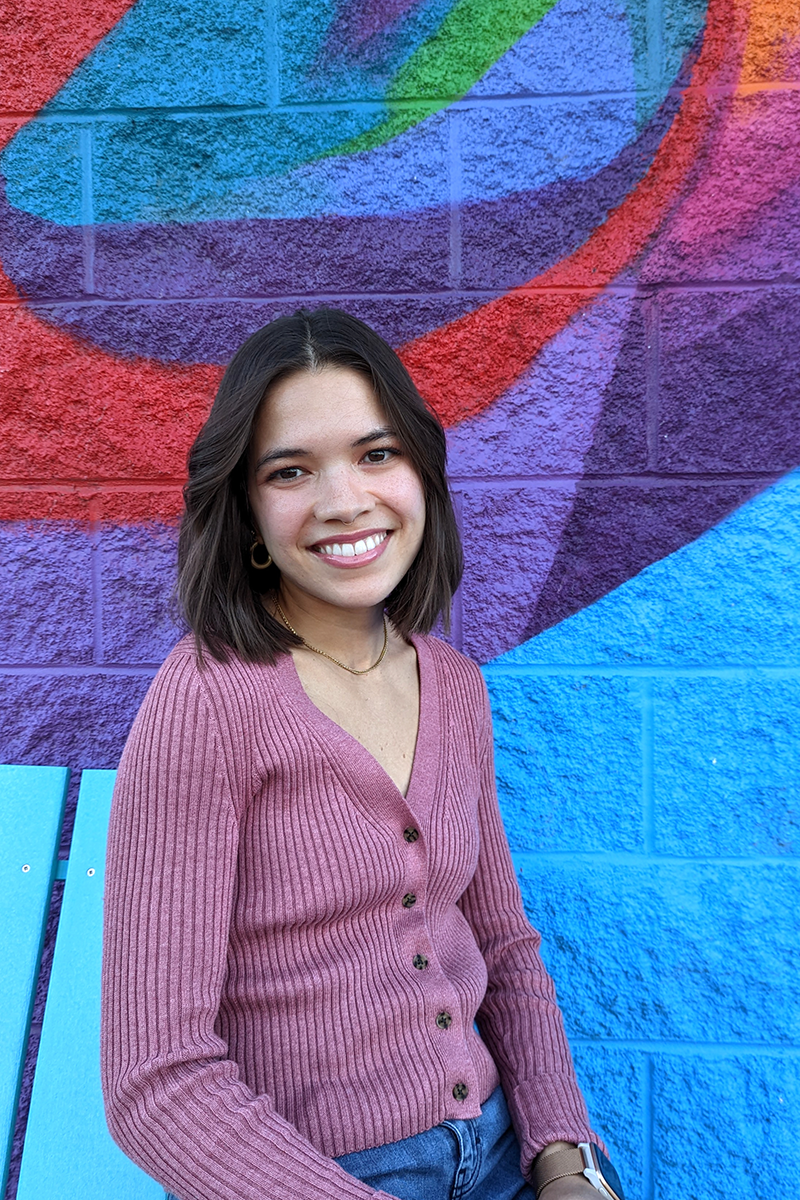
Sabine Loos
Assistant Professor
Post-disaster data overwhelmingly focuses on immediate impacts on buildings rather than the long-term needs of populations who live inside those buildings. As shown in this study of the 2015 earthquake in Nepal, data can instead be leveraged to capture the recovery needs of vulnerable populations.
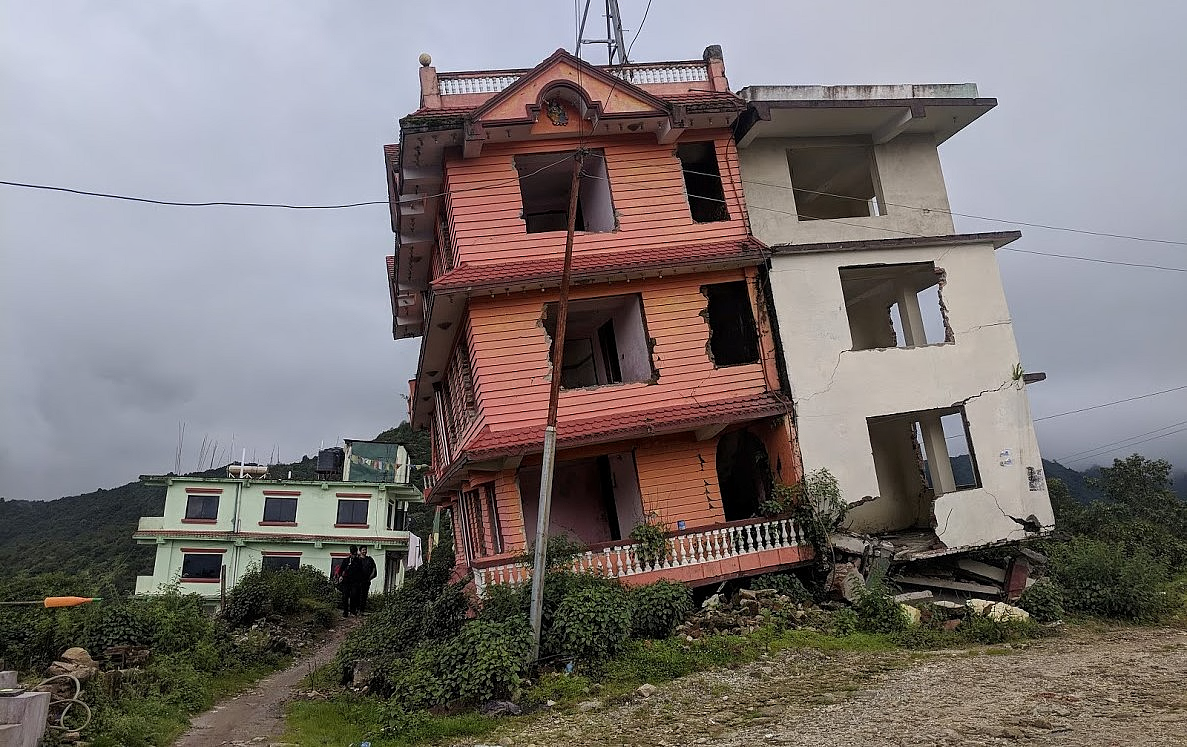
Big data for whom? Data-driven estimates to prioritize the recovery needs of vulnerable populations after a disaster
Sabine Loos
Assistant Professor
Going beyond building damage to support vulnerable populations' recovery needs after a disaster.
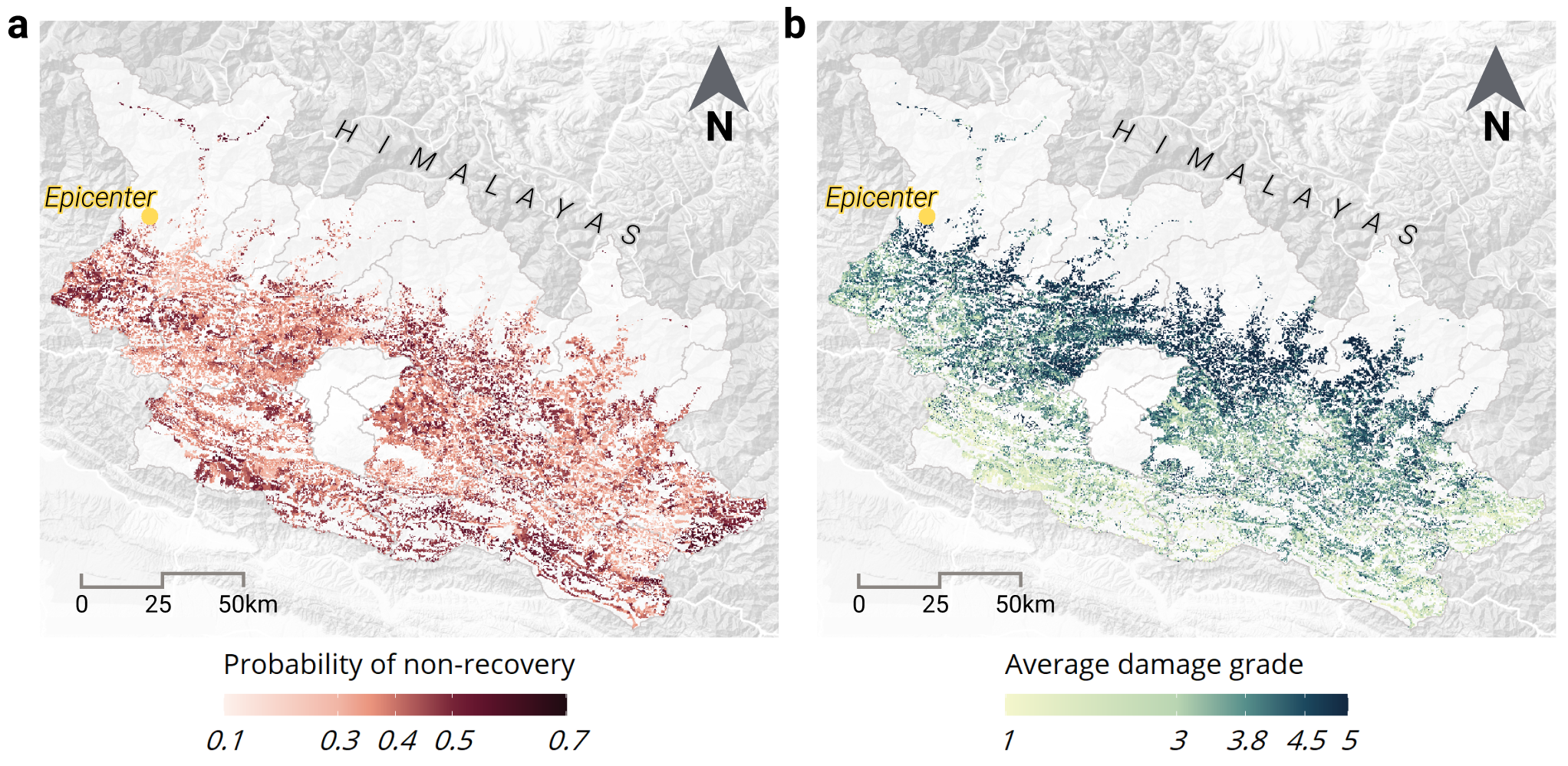
A data-driven approach to rapidly estimate recovery potential to go beyond building damage after disasters
Sabine Loos
Assistant Professor
In this talk, Sabine presents on three main examples of designing earthquake information to be more actionable by centering user needs and more equitable by prioritizing vulnerable populations.
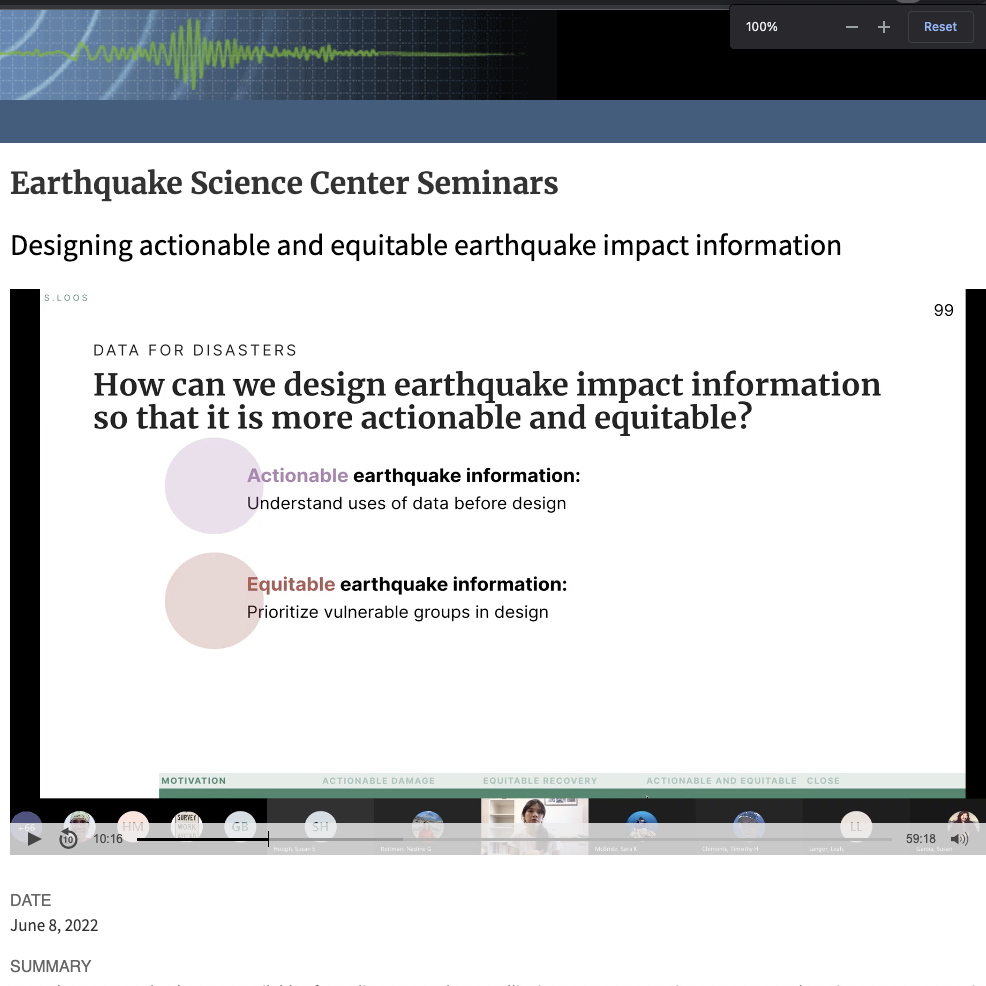
Designing actionable and equitable earthquake impact information
Sabine Loos
Assistant Professor
An overview of the project for supporting equitable recovery through impact assessments.
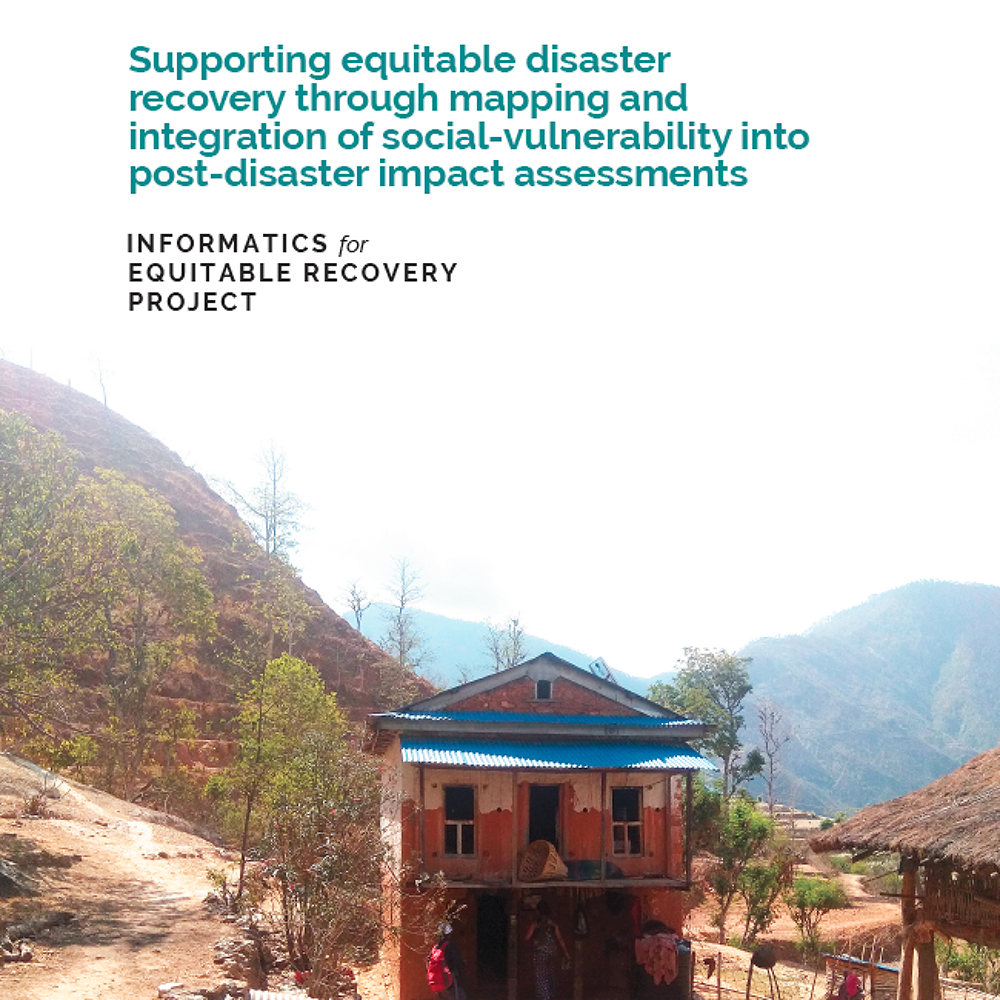
Informatics for equitable recovery: supporting equitable disaster recovery through mapping and integration of social vulnerability into post-disaster impact assessments
Sabine Loos
Assistant Professor
The Asia-Pacific region is an exciting opportunity for transdisciplinary work, because the research space is still rapidly growing and forming, the region is traditionally less data-rich, which inspires more creative data collection and data use; meanwhile, the hazards are numerous and the risks rapidly evolving due to population growth and climate change, and requires the need to balance development with disaster risk reduction.
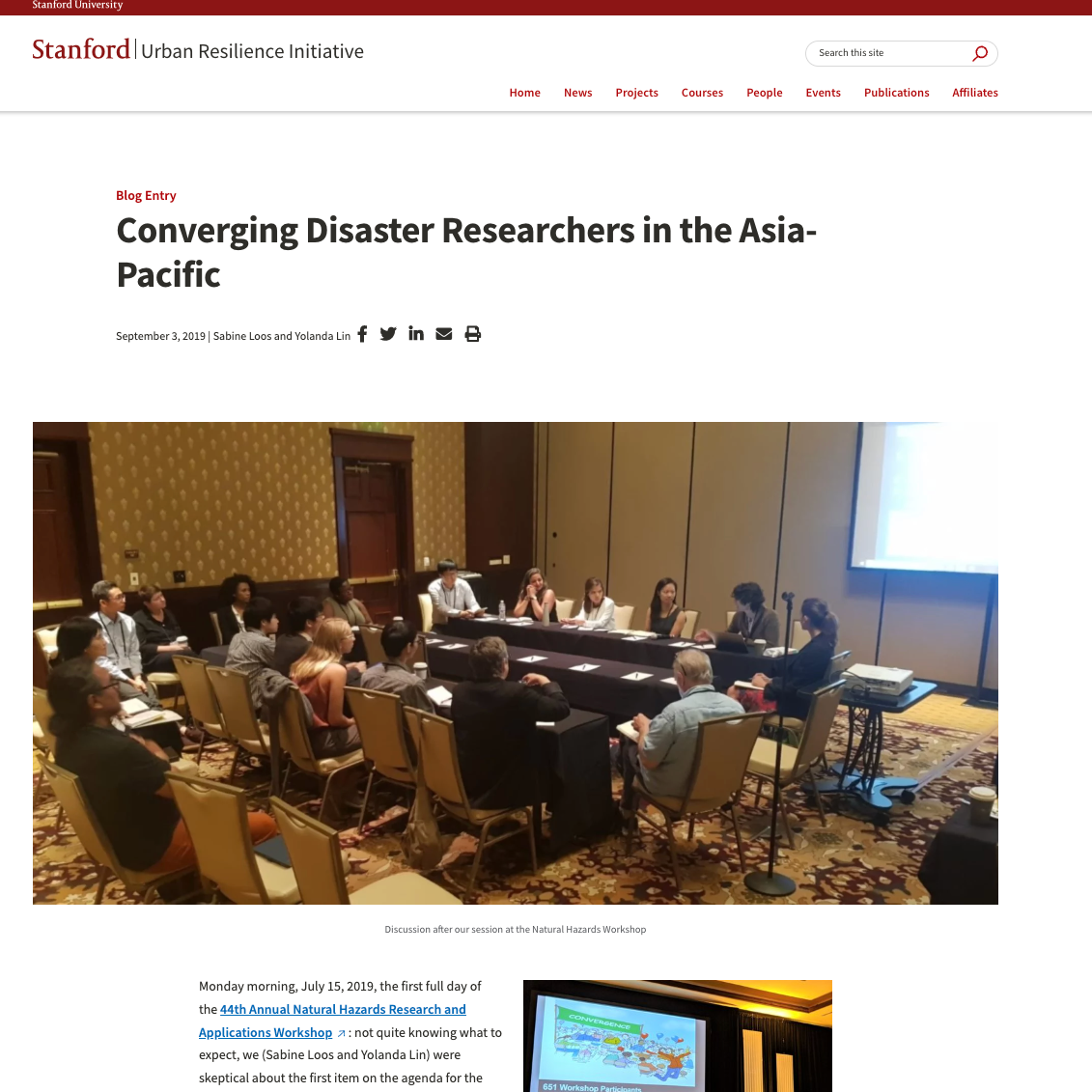
Converging Disaster Researchers in the Asia Pacific
Sabine Loos
Assistant Professor
Exploring the impacts and reconstruction of the 2015 Gorkha earthquake.
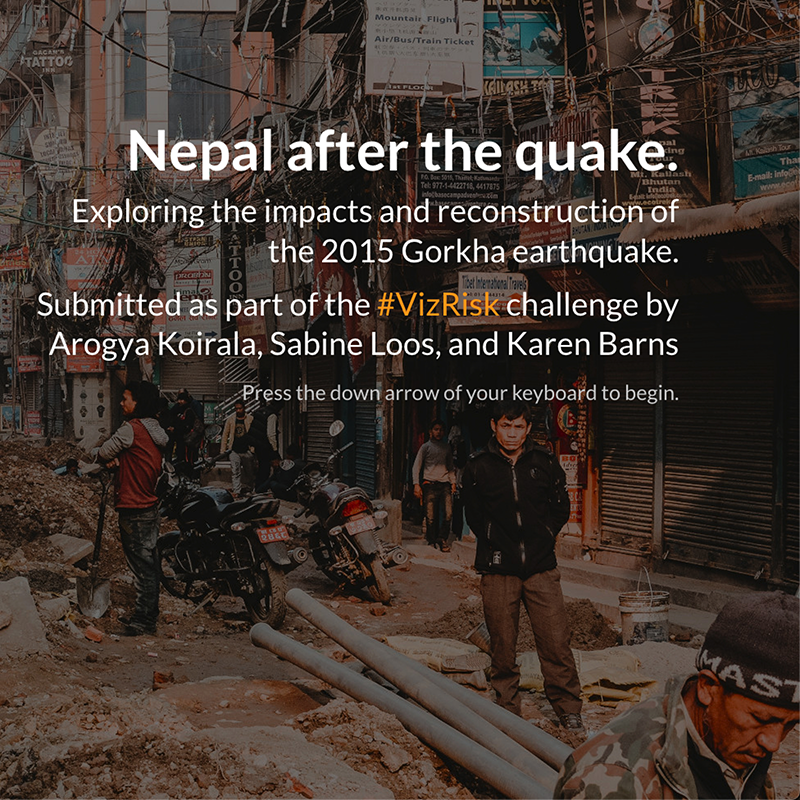
Nepal after the quake.
Sabine Loos
Assistant Professor
Sabine Loos presents on her research on the rapid integration of post-disaster data sources as a basis for impact estimation for recovery planning at our 2nd annual Geospatial Analysis for International Development (Geo4Dev) conference.
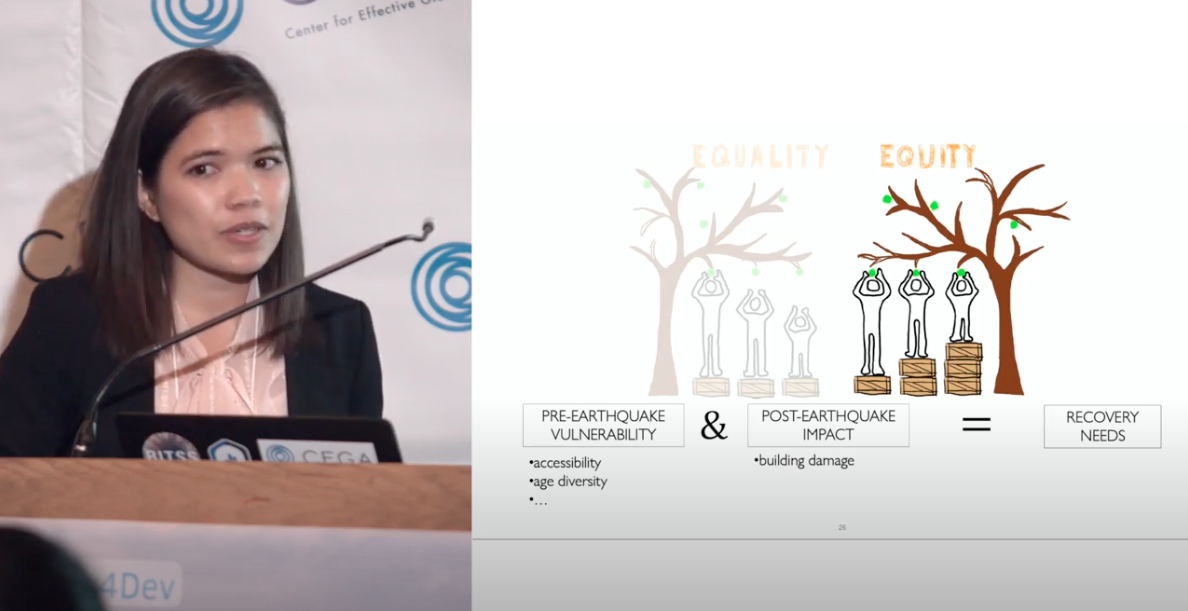
Rapid integration of post-disaster data sources - Sabine Loos
Sabine Loos
Assistant Professor
Why we need metrics other than economic losses for smart recovery decisions.
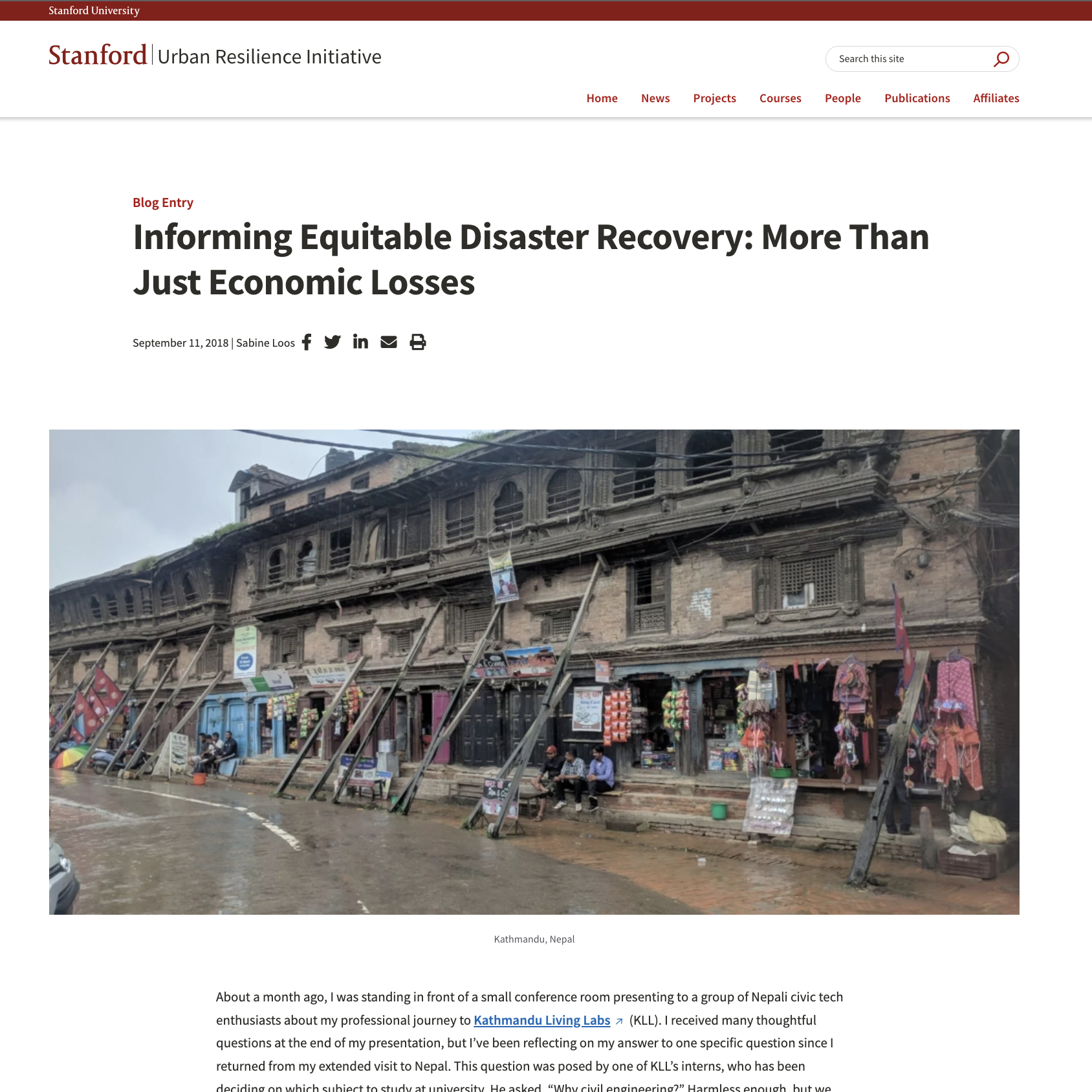
Informing Equitable Disaster Recovery: More Than Just Economic Losses
Sabine Loos
Assistant Professor

Send us an email sloos [at] umich [dot] edu
We are looking for new team members and partners!
Office Address: GG Brown, 2350 Hayward St, Ann Arbor, MI 48109